 Göreme City Guide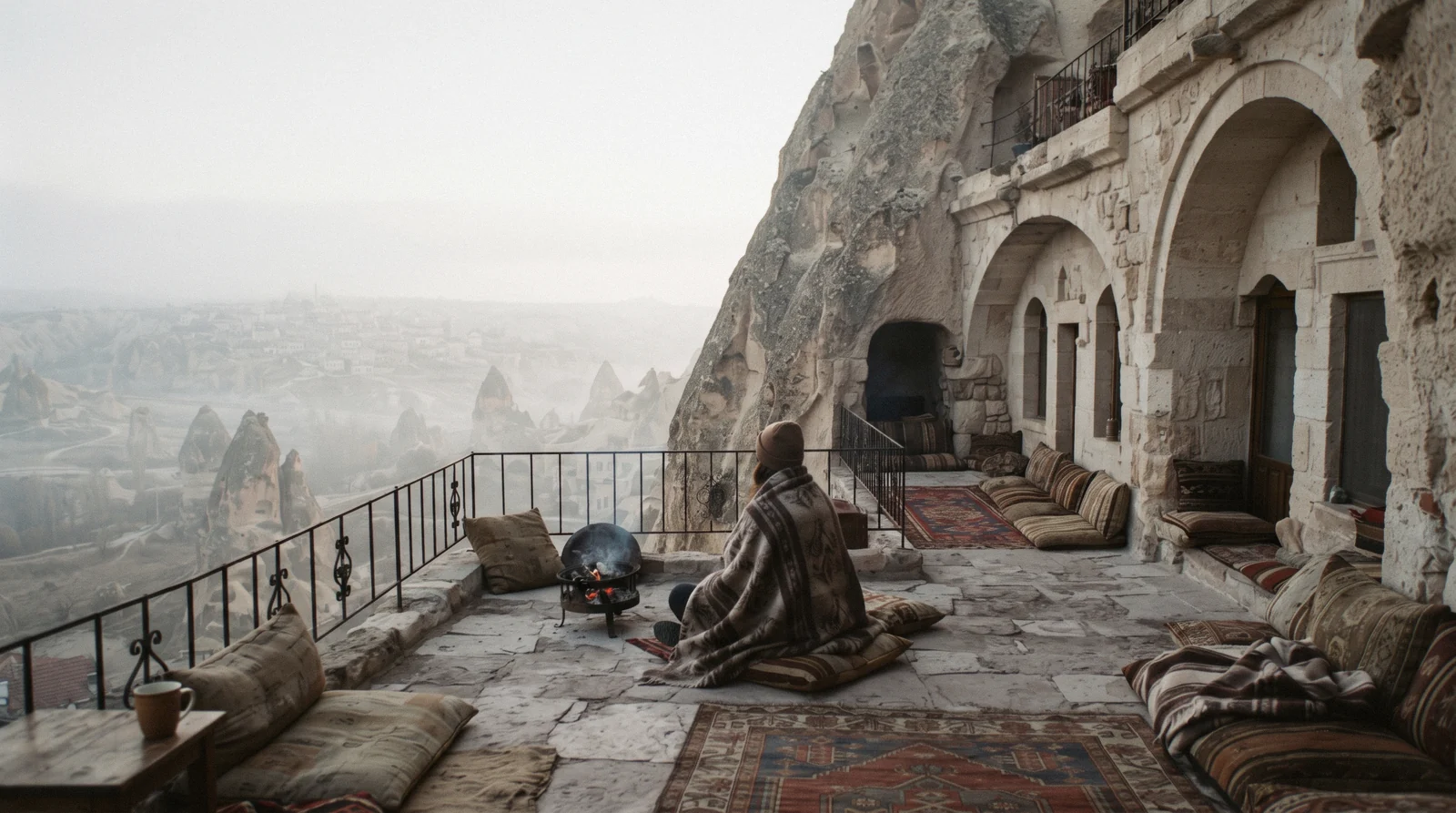
Cappadocia Cave Hotels: What You Are Really Sleeping In
Sleeping inside the rock is the reason many visitors come to Cappadocia at all, and Cappadocia cave hotels are the format that sells it. The label covers everything from chambers genuinely cut into the tuff centuries ago to ordinary stone-built rooms dressed with rock-patterned plaster, all sold under the same two words. Göreme alone holds more than 30 cave hotels, spread across the range from one star to five star. The landscape that made this possible is the Göreme National Park and the Rock Sites of Cappadocia, the UNESCO World Heritage property inscribed in 1985, where dwellings, monasteries and churches were cut into the soft volcanic rock long before the first hotel opened its doors. No official source publishes hotel rates anywhere in the region, so this page explains what the money buys rather than what it costs. For the choice of quarter, start with where to stay in Göreme, and the region as a whole is covered by the Göreme city guide.
Quick answer Genuine carving, the three tiers, what the money buys, and when to book.
A cave stay is worth it for one or two nights, because the carved room and the terrace morning are the two things a Göreme trip is remembered by. The honest check is the property's own room ladder, with cave rooms listed above stone or main-building rooms. What you pay for is the room's depth into the rock, the view over the valley and the terrace, in that order. Book the balloon first and the room around it.
Key takeaways
- How to tell a room is genuinely carved
- The three tiers and what each rung sells
- What the money buys
- The sunrise balloon flight, booked for the first morning
Which rooms are genuinely carved
The word cave on a booking site is a room category, not a geological fact. Properties sell built rooms and carved rooms under one label, and the difference is visible once you know what to look at.
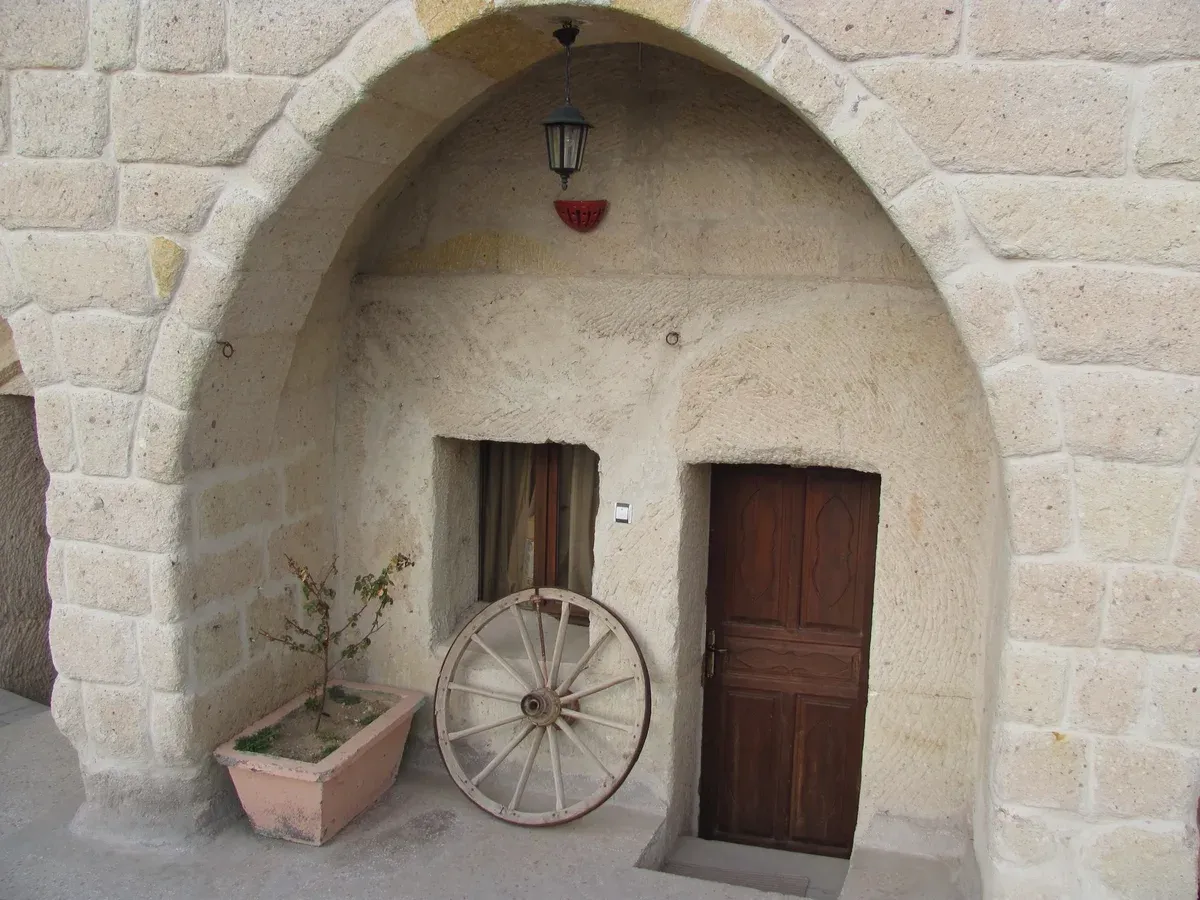
Photo: Slyronit, CC BY-SA 4.0, via Wikimedia Commons
The four signals in the room's own photos
No official body certifies a room as original rock-cut. What follows is what experienced bookers look for in the photographs, not any official standard. The first signal is window depth.
A cut chamber shows narrow openings set deep in thick walls, so you look out through a tunnel of stone. A built room shows shallow frames in thin walls, glass close to the plaster. The second signal is the ceiling.
Carved rooms have irregular, hand-worked ceilings with tool marks, and the height steps up and down across the room. A single flat plaster plane means the ceiling was built, not dug. The third signal is soot.
Chambers that served as dwellings carry a darkened patch on the ceiling above where a hearth once burned, and good hosts point at it with pride, because it is the room's biography. The fourth signal is the door and the stair. Rock-cut levels rarely line up with modern floor plans, so a half-step here, a worn sill there, or a doorway a head lower than expected is a good sign of age rather than a fault.
Then the honest caveat. Rates and room histories are not stated by any official source, so the photos and the room ladder are the evidence a booker has. Read the room list at each property, compare the cave rooms against the stone rooms on the same site, and let the property's own ranking tell you which rooms it considers its real product.
What the rock is
The landscape is volcanic tuff, a stone soft enough to cut with hand tools. That single fact explains the whole region. A farming and refuge culture dug dwellings, dovecotes, monasteries and whole churches into it, and the visible result is the UNESCO World Heritage property inscribed in 1985 across the Göreme national park and its rock sites, spanning Nevşehir, Ürgüp and Avanos and including the underground cities of Derinkuyu and Kaymaklı.
The hotels inherit that stock. The older quarters of Göreme and Uçhisar are honeycombed with chambers, and a genuine cave room is often a room a family might have kept animals or grain in a century ago, swept out, wired and furnished. To see the original carving at its best, visit the national park itself, and the open air museum, where the rock-cut churches show the tool work, the soot and the deep window sills in their purest form.
Once you have seen those, you can read any hotel room in Göreme in about thirty seconds.
The three tiers of a cave stay
Every property in the region sells some version of the same three products, and naming the tier you want is the whole booking decision. The table below sorts the market into its honest parts.
Historic suites, cave-style rooms and the terrace tier
The room ladder is the honest price signal. The same property sells all of these under one roof and lists cave above stone, view above inward, suite above both. Whatever the marketing says, the ladder tells you which rooms the property itself considers its real product.
If a site advertises itself as a cave hotel but buries its stone rooms three clicks deep, that tells you something. If the cave rooms are the first thing listed and the photos show deep windows and worked ceilings, that tells you something too. Match the tier to the trip.
One or two nights in a historic suite is the classic play. A week with a family fits a stone room better, with the terrace used for the mornings instead of paid for at midnight.
| Type | What it really is | Who it suits |
|---|---|---|
| Historic rock-cut suite | A chamber genuinely cut into the tuff, often an old dwelling, with deep windows, thick walls and the property's best address | Couples, honeymoons, one or two nights where the room is the point |
| Cave-style or stone room | A built room in local stone, often with rock-patterned plaster and arched details, comfortable and standard-shaped | Longer stays, families, anyone who needs space and storage |
| Cliff and terrace room | A room bought for its terrace or balcony over the valley, carved or built, priced for the view | Photographers, balloon watchers, dawn breakfast people |
| Main-building room | The ordinary hotel wing of a cave property, usually the cheapest label on the same ladder | Budget bookers who want the terrace without the cave premium |
What the money buys, compared
Since no official rate sheet exists, the honest way to price a cave stay is to know the four things that move a room from one ladder rung to the next. Understand those and any quote reads clearly.
The four things that change the price
Depth comes first. This is the cave premium itself, the charge for sleeping inside the rock, and it shows up as the same property's carved rooms listed above its stone rooms on the identical booking ladder. You pay for wall thickness, quiet and history, in that physical order.
The view comes second. A valley-facing balcony adds the most on the terrace tier, where the room is effectively a bed placed in front of a panorama, and view labels cost the most at every property that carries them. Season comes third.
The booking market's own descriptions put November to February as the value months and summer as the expensive one, and the swing between them is the largest in the region's accommodation, wider than any other single factor a booker controls, consistent across Göreme, Uçhisar and Ürgüp. The extras come fourth. Spas, private hamam-style baths, and the top suites with their own plunge pools sit at the top of every ladder and are priced as destinations in themselves.
Now the finding that frames all of it. Nightly rates for the region's cave hotels are not stated by any official source. No ministry, municipality or tourism board prices a bed, so this page explains what the money buys rather than what it costs, and the character lines here are qualitative readings of the booking market.
Re-checked in Q3 2026.
What sits on top of the room bill
Breakfast is included in the room price at most properties, and it is the regional norm rather than a perk, so read it as part of the rate. Airport shuttles are the other predictable extra, with the shared service from either Nevşehir Kapadokya or Kayseri Erkilet to a hotel door at $11.46 (€10) per person. Then comes the sightseeing budget that pairs with the room.
The open air museum day entry is $22.93 (€20), with the Dark Church inside it on a separate ticket at $14.90 (€6). The Museum Pass Cappadocia covers both of those plus Derinkuyu, Kaymaklı, Zelve and Paşabağ and the Ihlara Valley entrances at $74.51 (€65) for three days, one entry per museum. If your stay runs to the three-night norm and you plan two or three sites, the pass usually earns itself.
The full arithmetic around a stay, from shuttles to food to SIM cards, is on Göreme costs, which keeps every figure to its official or operator-published source.
Breakfast on the terrace
The terrace breakfast is the cave hotel's real product, and the balloon hour is why it starts before most people wake. Everything about the format is arranged around one hour of light.
How the terrace morning runs
Breakfast is included in the room price at most properties, and on flight mornings it is served from before dawn. Buffets run to dozens of items in guest descriptions of the larger properties, and the staples repeat everywhere, cheeses, olives, honeycomb, breads, eggs, jams and yogurt. Guests flying that morning are collected from the hotel door about an hour before dawn, and hosts hand them a packed breakfast for the ride, a practice guest reports confirm, so the meal travels in a bag and is eaten at the launch field or after landing.
On roughly 260 flyable days a year the sky fills with balloons from first light, cleared launch by launch by the civil aviation authority's local office, and the terraces, stacked with cushions and carpets for exactly this hour, become grandstands. That is what the roof decks were built for. The etiquette and the reality are simple.
Deck space in high season goes early, so claim a cushion before the first basket lifts if the view matters to you. Some properties reserve the best roof for guests only, and others open it to anyone who buys a tea, so ask at check-in rather than assuming either way. And the whole show is free from any terrace in town even when you are not flying, which is why paying for a view room is a comfort purchase, not an access purchase.
If a grounded morning looks likely, the weather logic is on cappadocia balloon weather, and the flights themselves, timings and tiers are on the balloon rides page.
Honeymoons and the photo terraces
The region's top tier exists for couples, and the photo economy drives it. The cushions, the rugs and the lamplight are the marketing, so it helps to know what is staged and what is real.
What couples actually book
The honeymoon suite is a real category here, the top of the historic tier. These are carved suites with bathtubs set into the rock, private terraces and the kind of lamplight the region photographs well, often with fireplaces for the cold months. The format stretches in ways a built room cannot, which is the whole pitch: the region's top suites advertise bathrooms hewn straight out of the living rock, spare bathtubs set into a corner of the sitting room, and two-chamber layouts that follow the shape of the cave rather than any floor plan.
The honest advice starts with the famous terraces. The photo terraces with cushions and rugs are often shared spaces. Some properties stage them and charge nothing, others gate them for guests, and the famous sunrise shots mean standing on a roof deck with a dozen other couples unless you book the suite whose terrace is genuinely private.
Ask that question directly, private terrace or shared terrace, because the two are sold under similar photos. What is worth paying for in this tier is privacy and depth. A suite at the quiet end of a property, one level down from the breakfast stair, beats a bigger label on a busier photograph.
The deep windows and thick walls are the actual luxury, because they buy silence. Winter weddings and winter honeymoons get the terraces empty and the fireplaces lit, and the value season prices apply, which is why some couples book the cold months deliberately. For which quarter puts these properties on the valley edge rather than behind the town, see where to stay in Göreme, and for the evening that follows the sunrise, the night page covers dinner and the lit chimneys.
Where the cave hotels actually cluster
Cave hotels are not spread evenly across the region. They follow the old rock-cut quarters, and knowing the clusters tells you which property type you are booking before you open a listing.
Göreme first, then the ring of villages
Göreme holds the deepest market, with more than 30 properties stacked from dorm beds to five-star suites, and the two quarters split them neatly. The Aydınlı valley edge carries the carved and terrace properties that photograph best, while the flat grid around the bus square holds the converted town houses and the bigger built wings. Uçhisar is the second cluster, a quieter stock of stone and carved properties under the rock castle at the highest point of the landscape, reached on the Ürgüp to Uçhisar dolmuş or a two-hour walk through Pigeon Valley, and the castle climb above the village reopens the widest view in the region to whoever sleeps there.
Ürgüp and Ortahisar carry smaller, more residential stock, wine country rather than balloon central, and Çavuşin has a handful of properties under its collapsed ridge, with the trails from the door and the ridge church closed for restoration. The practical rule falls out of the geography. If the cave-stay experience itself is the point, book the Aydınlı edge.
If silence is the point, Uçhisar. If the wider region, wine and a car are the point, Ürgüp or Ortahisar. The quarter-by-quarter trade-offs are compared on where to stay in Göreme.
What the cluster changes in practice
The cluster you pick reaches into details that never appear on the room card. Pickup vans work the valley-edge lanes in the dark before dawn, so an Aydınlı booking is collected early and an Uçhisar booking earlier still, because the vans sweep outward from Göreme. Dinner is the other practical dividing line: the flat grid of Göreme puts a dozen restaurants within a five-minute walk, Uçhisar and Çavuşin expect you to drive or ride after dark, and Ürgüp keeps honest town hours rather than tourist ones.
Winter sharpens every one of these trades, because the lane that is a pleasant climb in May is an icy one in January, and the villages empty further than the town does. Ask the property two practical questions with the booking, how the luggage reaches the door and whether the lane is lit, and the answers will tell you more about the stay than the star rating does.
Winter in a cave room
Rock is the room's friend in July and its test in January. The mass that keeps a chamber cool at noon can hold a chill at midnight, so winter booking is heating booking.
How the rooms heat, and what to ask
January averages -4.4 °C at night and 5.5 °C by day on the region's 30-year climate record, so heating is the real winter question, not decoration. Tuff holds temperature, which is why a carved room stays cool in summer, and the same mass warms slowly. A heater that switches off at midnight is felt by 03:00, because the walls have absorbed the day's chill and the air alone cannot carry the room.
Heating is a per-property lottery of radiators, underfloor coils, blankets and electric quilts. Two properties on the same lane can answer the cold completely differently, and no listing states it reliably. Guest reviews answer it faster than any description, so read the cold-month reviews specifically and skip the summer ones.
Ask two questions before booking. Whether heat runs all night, and whether hot water is on demand rather than on a timed boiler. Both answers are one word each and both decide the stay.
The compensation is real. Snow on the fairy chimneys, terraces to yourself, empty lanes in Çavuşin and Uçhisar, and the value season's quiet at summer's opposite price. One facility note keeps expectations straight.
The region has no historic hamam. The Turkish bath on hotel menus is a modern spa ritual, so book it as that and not as a relic, and price it accordingly. The full seasonal picture, snow odds and the balloon calendar, is on Cappadocia in winter.
Steps, ledges and uneven floors
The cave format's honest drawback is that rock does not do level. The same features that photograph well are the ones that make some rooms hard work, and the list is consistent across the region.
Who a cave room is hard for
The drawbacks are physical and consistent. Stairways between levels are steep and uneven, cut for people a century ago and never widened. Floors are worn and sloping where generations of feet and hooves crossed them.
Doorways and lintels sit at head height, and taller guests learn to duck within an hour. Rooms are reached along outdoor lanes, so rain and ice cross the path between the breakfast room and the bed. The deepest chambers have small windows or none, which is the price of sleeping far inside the rock.
Families find genuine connecting rooms rarer than in built hotels, because carved chambers rarely align, so filter for family rooms specifically rather than assuming two single rooms can be joined. Anyone with limited mobility should book a ground-level stone or main-building room and ask about step counts in writing before paying for a carved suite, because a listing photo cannot show a staircase gradient. Light sleepers should know the walls that block sound from outside also trap sound inside, and a chamber next to the breakfast stair wakes with the trays before dawn on balloon mornings, every morning of the stay.
None of this is a reason to skip the format. It is a reason to match the room to the guest, which is what the ladder is for. Families planning the wider trip will find the family layer of the region on Göreme with kids, including which activities suit the under-sixes.
The booking-time checks are unglamorous and they work. Ask for photographs of the bathroom, because a step into a wet room is a step you will meet in the dark. Ask how many steps from the lane to the room and whether staff carry luggage, because at a hillside property the honest answer is a number with a curve in it.
And if anyone in the party uses a stick or a wheelchair, book the ground-floor built wing without apology, because the carved tier was cut a thousand years before anyone coined the word accessible, and no ramp retrofits a tuff hillside.
Booking against the balloon calendar
The balloon calendar sets the rhythm of the region's room bookings, and the direction runs from the flight to the bed, never the other way. Get that order wrong and both cost more.
The flight first, the room second
The standard play is to book the sunrise balloon flight for the first morning and keep a spare day behind it. The reasons are structural. Flights run about 260 days a year, and every launch is cleared by the civil aviation authority's local office against its weather limits.
A weather cancellation is refunded in full, and free written cancellation runs to 48 hours, which makes the first-morning booking low risk as long as a backup day exists in town. The room then follows the flight. Balloon-day mornings favour early check-ins, because pickups start an hour before dawn and luggage arrives before the room is technically yours.
Travellers landing late either book the night before the flight, accepting a night they barely use, or accept paying for that night knowingly. Trying to save it usually means a transfer at 04:00 and a tired first morning. Season shapes the rest.
Summer and the two shoulder seasons fill view rooms first, and the three-night stay is the visitor norm, long enough to absorb one grounded morning without losing a day of the region. Where the room sits matters as much as when, because pickup vans work the valley-edge lanes before dawn, and a hotel on a narrow upper lane in Göreme or Uçhisar adds minutes and stress to the pickup. The flight mechanics and tiers are on the balloon rides page, the airports and routes on getting to Göreme, and the transfer closes the loop with shared airport transfers from $1.26.
The two bookings around the room
The flight books first and shapes every morning of the stay. The transfer closes the loop from either airport to the hotel door.
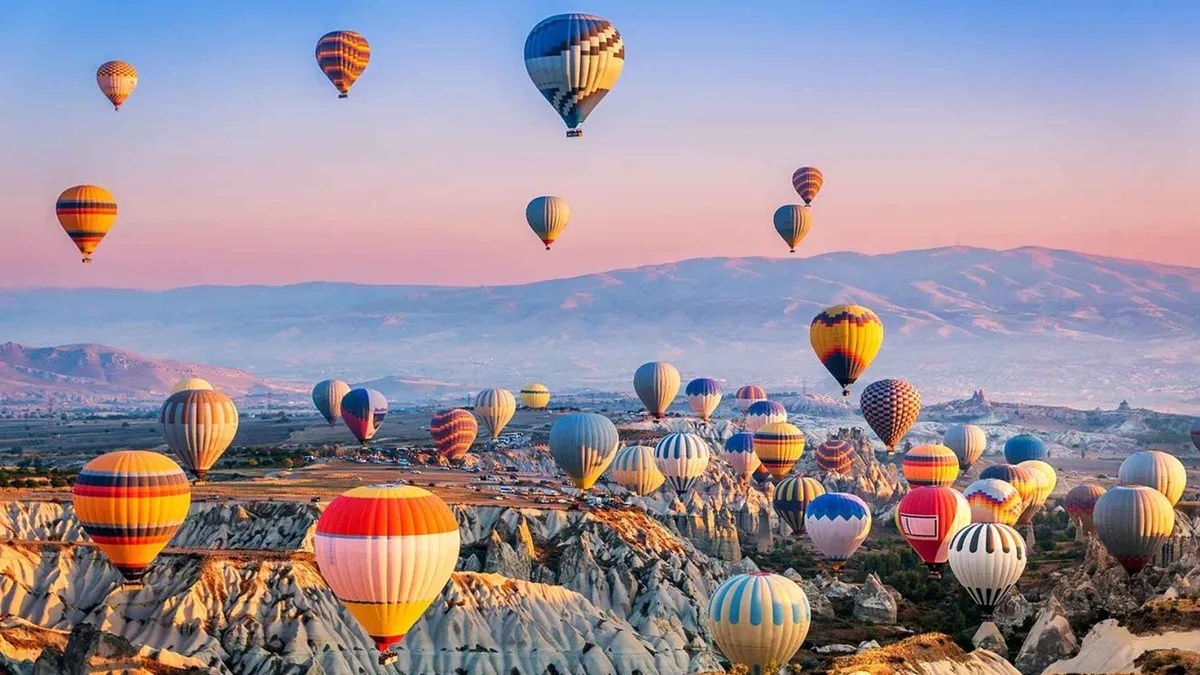 from $103.04
Cappadocia: Göreme Sunrise Balloon Flight Discovery Balloons
The valley classic: about an hour airborne over the Göreme cones at first light, with hotel transfers, breakfast at the field and a certificate after.
Check Availability from $1.26
Private & Shared Transfers for Kayseri and Nevşehir Airports
Meet-and-greet shuttles between your cave hotel and either airport, shared or private, priced per person from $1.26 on the shared seat.
Check AvailabilityPrices, ratings and details are the platform's own. dollar figures are the listed prices — the platform bills in your account's currency.
Keep planning
Where to base the stay
Quarter by quarter, with hotel cards. The full choice of neighbourhood is on where to stay in Göreme.
What the region costs
Tickets, shuttles, food, SIM. The complete budget sits on Göreme costs.
When to come
Balloon seasons and winter. The month-by-month answer is on best time to visit, and the rest of the region waits on the Göreme city guide.
Cappadocia cave hotels: questions
Is it worth staying in a cave hotel in Cappadocia?
Yes, for one or two nights, because the carved room and the terrace breakfast are the two things the trip is remembered by. It is worth it longer only if the room is genuinely carved, which the property's own ladder between cave and stone rooms reveals. If the site lists built rooms and carved rooms side by side, the carved ones are the real product. The signals to check are in which rooms are genuinely carved.
Which cave hotel in Cappadocia is considered the best?
No official ranking exists, and this guide names no single property. The tier system does the work instead. Pick the historic tier if the room itself is the point, the terrace tier if the view and the balloon hour are the point, and the stone or main-building tier for space and budget. Then read the ladder at each property to see which rooms it treats as its real product. The full sorting is in the three tiers.
What are some of the drawbacks of staying in a cave hotel?
Uneven floors, steep stairs between levels, low doorways and lintels, small or absent windows in the deepest rooms, and heating that varies by property in winter. Rooms reached along outdoor lanes add rain and ice to the path. None of this is hidden, all of it is visible in photos and reviews, and most of it is manageable by matching the room to the guest. The honest list is in steps, ledges and uneven floors.
Are cave hotel rooms cold in winter?
Outside it is serious cold, with January nights averaging -4.4 °C, and a carved room is only as warm as its heating. Rock warms slowly and cools slowly, so a heater that stops at midnight is felt by early morning. Heating systems vary from radiators to underfloor coils, and the cold-month guest reviews are the real source on any specific property. The full picture is in winter in a cave room.
Do all Cappadocia cave hotels have real carved rooms?
No. The label covers built stone rooms and rock-patterned plaster too, and the same property often sells both under one roof. The room ladder is the first check, because cave rooms listed above stone rooms show which ones the property considers genuine. The window, ceiling and soot signals tell the rest, and they are set out in which rooms are genuinely carved.
How far ahead should I book a cave hotel in Göreme?
Book the balloon first, for the first morning with a spare day behind it, then the room around it, because balloon mornings favour early check-ins and pickups leave about an hour before dawn. View rooms in summer go first, and the three-night stay is the norm, long enough to absorb one grounded morning. The full sequencing is in booking against the balloon calendar, and the flight itself is the sunrise balloon flight.
Inside the cave hotels
Three films that show the format at its three levels, a full multi-night stay, a single room close up, and the top of the ladder.
Living in a 2000-Year-Old CAVE?! Dervish Cave Hotel Cappadocia | 3N/4D 4K Tour | Turkey Ep_12
A multi-night stay filmed room by room, the closest look at the format.
Video: Samreen's Dastarkhwan & VlogsEmpire Cave Hotel Room Tour | Cappadocia Turkey
One room, wall to wall, useful for reading window depth and ceiling shape.
Video: Rod EarlySevenCappadocia's Luxury Cave Hotel Suite | MUSEUM HOTEL Kapadokya (4K Turkey Trip Vlog)
The very top of the historic tier, to see what the highest ladder rung sells.
Video: ST TravelVideos load from YouTube only when you press play.
Prices, hours and terms are set by the venue or operator and confirmed at checkout.
We may earn a commission if you book through one of our links, at no extra cost to you. Full affiliate disclosure