 Göreme City Guide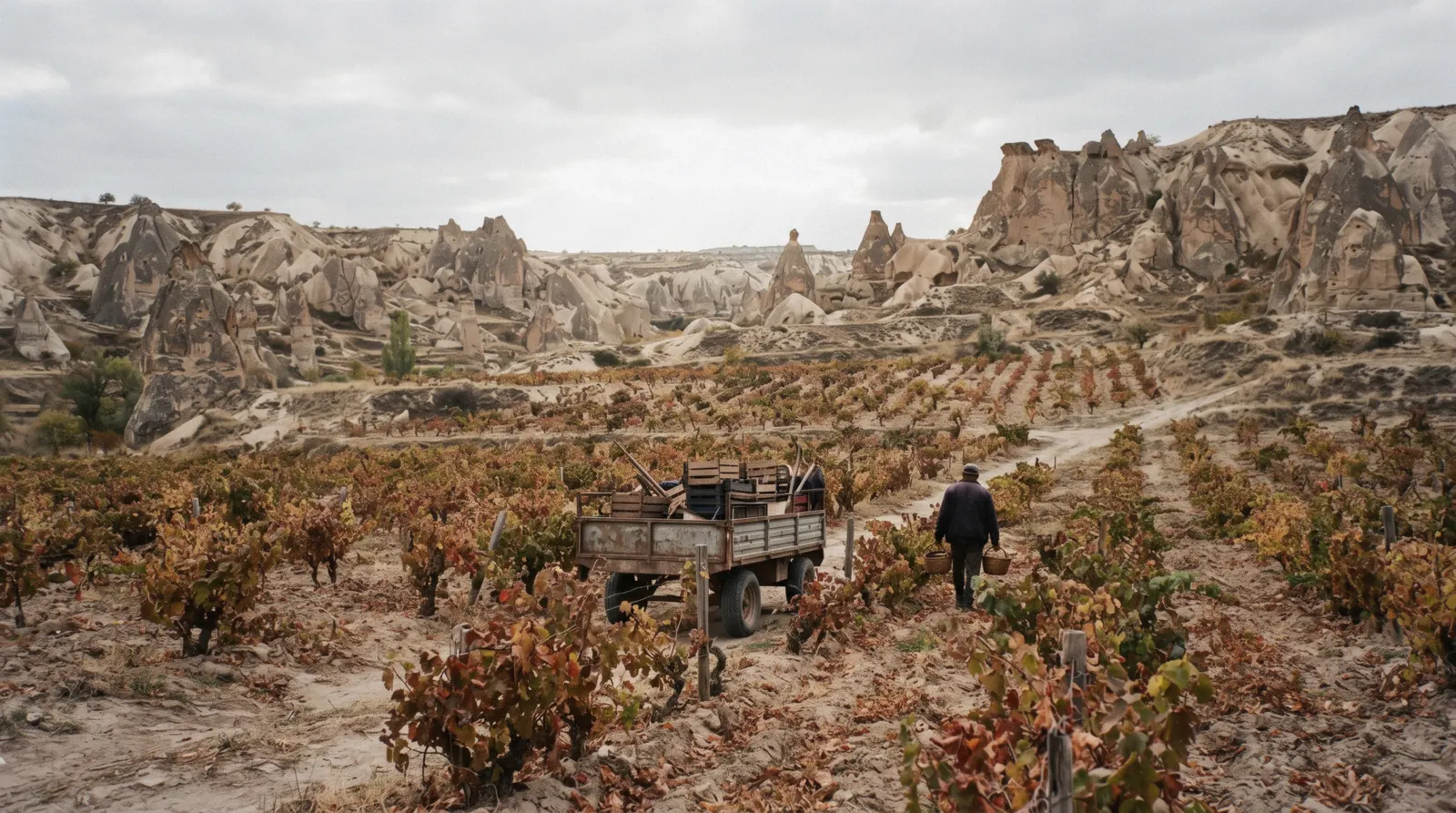
Best Time To Visit Cappadocia (And When To Skip It)
This page picks a best time to visit Cappadocia from data, not folklore. The figures are the ERA5 reanalysis averages for the Göreme valley over 1995–2024, month by month, with the practical reading attached to each. The verdict is April to June and September to October, with honest cases made for the other months, because two things decide a Cappadocia trip more than any calendar does: whether the dawn balloon clearance comes through, and what the valley walking surface is doing underfoot. The same figures sit behind the best months row in the site footer, so this page is their long answer. Read it alongside Göreme and the balloon weather page before locking dates.
Quick answer The verdict months, the honest exceptions, and what actually changes
April to June and September to October are the best months for Cappadocia, on ERA5 averages that put daytime highs at 16.9–26.3°C in spring and 19.7–26.0°C in autumn with tolerable rain. July and August work if heat is managed around dawn, because they are the driest months at 4.4 mm of rain. Winter is the honest-exceptions case, cold nights averaging −2.2 to −4.4°C but flyable mornings and the region's thinnest crowds.
Key takeaways
- The one booking the season decides is the balloon flight, and the small-group sunrise flight is the format to compare against.
- Museum hours and holiday closures shift the plan more than weather does. See the open air museum tickets page.
- Rain is scarce in high summer, 4.4 mm in July, but March is the wettest month at 55.5 mm, so spring trips pack for showers. Budget it with what a day costs.
- Two days is the workable minimum in any season, worked through in the 2-day itinerary.
The Göreme Valley Year On One Chart
Average daily high in Celsius with Fahrenheit beneath, computed from the ERA5 reanalysis for the Göreme valley over 1995–2024. The bands group months the way a trip actually experiences them, flying, walking, sweating or slipping.
- January — Nights average −4.4°C, the coldest of the year, and 46.6 mm falls over 9 days, so icy trail mornings are the norm.
- February — Rain eases to 36.3 mm over 7.6 days but −3.9°C nights keep the shaded paths frozen.
- March — The wettest month at 55.5 mm over 11 days, so pack for showers and expect muddy valley floors.
- April — 50.8 mm of rain over 10.1 days falls as showers between green, walkable days and flyable dawns.
- May — Nights lift to 8.3°C and 50.4 mm spreads over 10.5 days, the best balance of green valleys and long daylight.
- June — Rain drops to 27.8 mm over 6.4 days and 12.4°C nights, so the crowds arrive with the dry weather.
- July — Just 4.4 mm over 1.0 day, the driest month, and 15.1°C nights make the dawn pickup pleasant rather than brutal.
- August — Another 4.4 mm over 1.1 days and 15.4°C nights, the stable weather behind the region's most reliable dawn clearances.
- September — Rain stays low at 13.9 mm over 2.6 days with 11.2°C nights, the walking-and-flying overlap at its best.
- October — 25.2 mm over 4.9 days and 6.1°C nights, so layers matter and trails stay firm between showers.
- November — 32.8 mm over 5.3 days and nights near 0.8°C start sealing the season for all but quiet-seekers.
- December — 40.8 mm over 8.4 days and −2.2°C nights bring snow on the cones and ice in the shade.
January nights average −4.4°C, the coldest of the year, while July and August average just 4.4 mm of rain a month, the driest stretch on the chart. What that means at 1,104 m elevation at 05:30 is worked through on the balloon weather page.
Month By Month In The Göreme Valley
Every figure below is the ERA5 1995–2024 average for the Göreme valley, with highs and lows in Celsius and Fahrenheit in brackets. The last column is the practical reading for a visit.
| Month | Day high | Night low | Rain | The month for |
|---|---|---|---|---|
| January | 5.5°C (42°F) | −4.4°C (24°F) | 46.6 mm, 9 days | Snow photography and the thinnest crowds |
| February | 7.4°C (45°F) | −3.9°C (25°F) | 36.3 mm, 8 days | Quiet museums and frozen-chimney mornings |
| March | 11.5°C (53°F) | −0.7°C (31°F) | 55.5 mm, 11 days | Fewer crowds, muddy trails and shower dodging |
| April | 16.9°C (62°F) | 3.7°C (39°F) | 50.8 mm, 10 days | Green valleys, flyable dawns, showers between |
| May | 21.7°C (71°F) | 8.3°C (47°F) | 50.4 mm, 11 days | The full package: warm days, mild nights |
| June | 26.3°C (79°F) | 12.4°C (54°F) | 27.8 mm, 6 days | Long days before the peak crush lands |
| July | 30.4°C (87°F) | 15.1°C (59°F) | 4.4 mm, 1 day | The most reliable dawn clearances, heat-managed days |
| August | 30.7°C (87°F) | 15.4°C (60°F) | 4.4 mm, 1 day | Dry skies, dawn starts, busy viewpoints |
| September | 26.0°C (79°F) | 11.2°C (52°F) | 13.9 mm, 3 days | Warm days, firm trails, reliable clearance |
| October | 19.7°C (68°F) | 6.1°C (43°F) | 25.2 mm, 5 days | Golden light, quiet paths, layered mornings |
| November | 13.0°C (55°F) | 0.8°C (33°F) | 32.8 mm, 5 days | Quieter museums and damp, empty valleys |
| December | 7.8°C (46°F) | −2.2°C (28°F) | 40.8 mm, 8 days | Snow shots, short days, icy shortcuts |
Fahrenheit readings are rounded from the Celsius averages. Rain is the monthly total with the average number of rain days.
Balloon Season: What The Weather Actually Decides
There is a balloon season on the booking platforms and a balloon reality on the ground, and the gap is worth understanding before you pick a month.
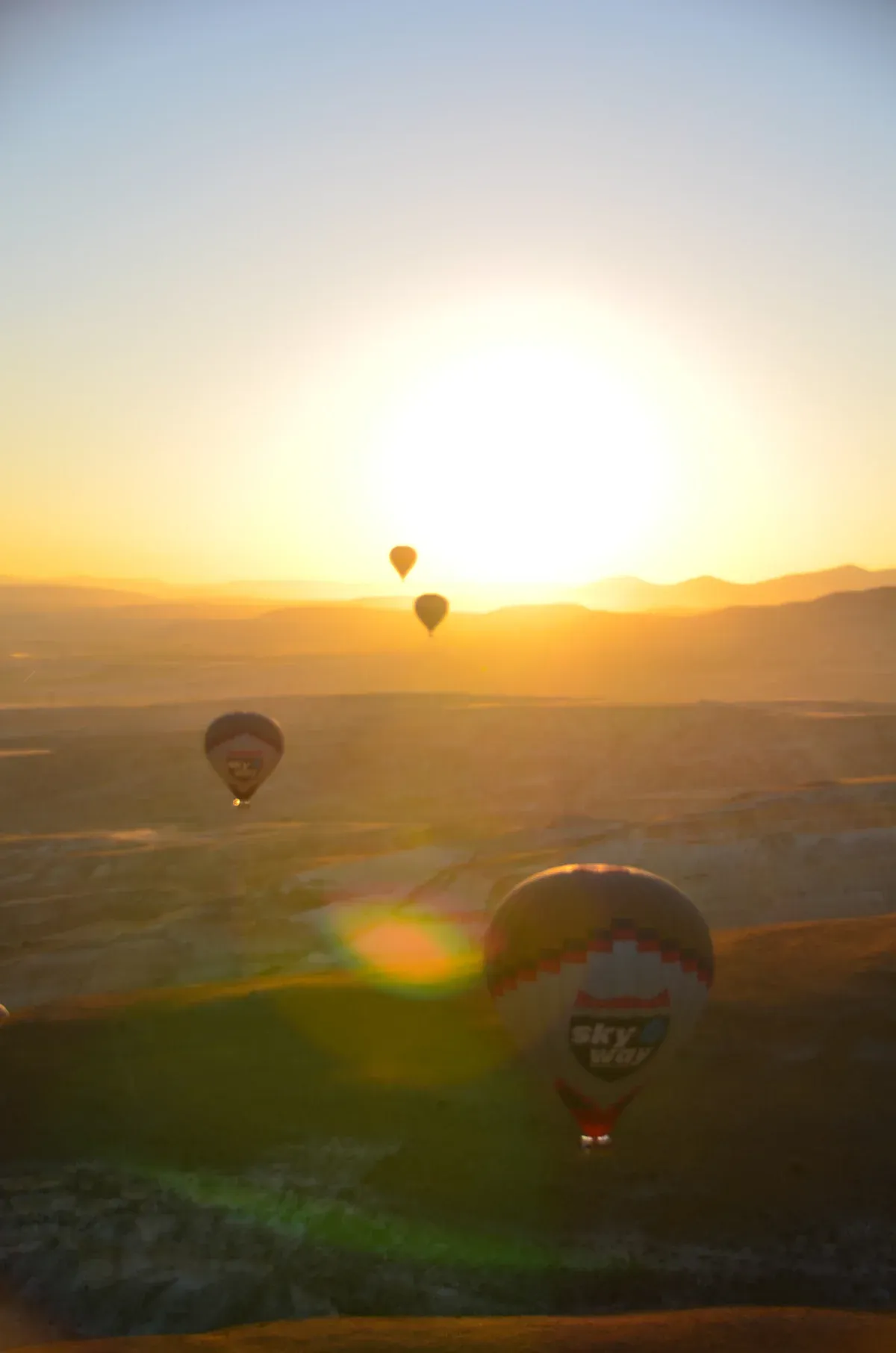
Photo: Kyle Lamothe, CC BY 3.0, via Wikimedia Commons
The rule that never changes
Balloons fly year-round whenever the civil-aviation office clears each dawn, roughly 260 flyable days a year. The decision is a formal go/no-go on wind and visibility, not a calendar season, so no month is closed and no month is guaranteed. Weather cancellation means a full refund, and free written cancellation runs up to 48 hours before the flight.
The practical detail lives on the balloon weather page, which explains what the clearance actually measures.
What the seasons change
What changes by season is the margin, not the rule. Summer's stable anticyclone weather is why July and August clear almost every dawn, and why the 04:00 hotel pickups feel soft with nights at 15°C. Winter's clear frozen mornings fly beautifully but carry more no-go dawns, and the cold at 1,104 m elevation is real at 05:30 in January when nights average −4.4°C. Dress for standing on frozen ground before sunrise, not for the warmth of the basket.
The booking rules
Some rules do not move with the season at all. No children under 6 fly and no pregnant flyers are accepted, for safety reasons every operator repeats. Expect about an hour airborne with three to four hours door to door including hotel transfers, inflation and the post-flight ceremony.
Operators publish no prices of their own, so the honest comparison is between platform listings such as the small-group sunrise flight.
How far ahead to book
How far ahead you book depends on the month you choose. Peak summer weeks and the religious-holiday long weekends sell out first, sometimes weeks ahead, because basket capacity is fixed by the slot system while demand spikes. Shoulder months carry more slack, and winter days usually leave room to book on arrival, though a stormy spell can empty a whole week of flights.
The month-by-month detail is on how far ahead to book.
What a cancellation day costs you
The money side is set by the listing rather than the season. Weather cancels, the payment refunds in full, and free written cancellation runs to 48 hours before the flight. Inside 24 hours or on a no-show the charge lands in full, which is why a dawn slot should never sit next to a morning flight out of Kayseri.
A refused dawn is rebooked to the next cleared morning when the diary allows, and the balloon weather page explains how the night forecast turns into the go-or-no-go call.
Walking Season: The Valleys Change Underfoot
The same trail is three different surfaces across the year, and the month you pick decides which one you get.
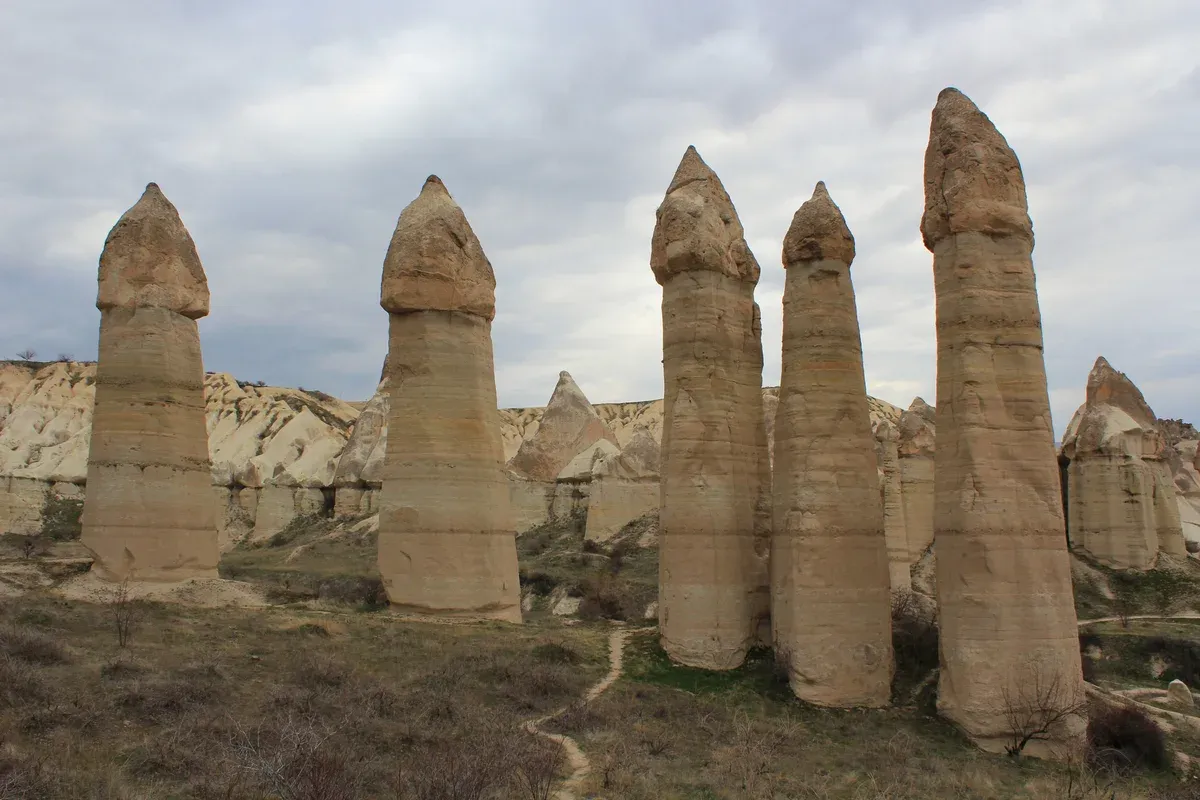
Photo: Arian Zwegers, CC BY 2.0, via Wikimedia Commons
Spring, April to June
Spring runs from April to June on highs of 16.9 to 26.3°C, and the rain that falls does so as showers, 50.8 mm in April, 50.4 in May and 27.8 in June. Valley floors are at their greenest of the year and the Rose–Red loop of about 5 km takes 2–3 hours at its most comfortable. Expect the odd muddy stretch after a wet day and pack a shell.
The route-by-route detail is on Cappadocia valley walks.
High summer on the trails
High summer pushes 30°C-plus afternoons, 30.4 and 30.7 in July and August, so walking moves to the hours around dawn, which is exactly when the balloons are up. Shade barely exists in the valleys and water carries you further than route choice does. Love Valley is better at 07:00 than at 14:00 by a wide margin, both for temperature and for the light on the cones.
Plan the museum for the afternoon instead.
Autumn and winter walking
September into October holds 26.0 then 19.7°C highs with 13.9 and 25.2 mm of rain, the walking-and-flying overlap at its best and the trails firm. From December the nights average −2.2 to −4.4°C and ice holds in the shaded valley paths well into the morning. No official hiking warnings exist for the valleys, which means the trail surface judgement is yours, so shorten routes and avoid shaded descents after freezing nights.
What the surfaces do to the named routes
The routes themselves do not change with the season, only their footing. The Rose–Red loop of about 5 km takes 2 to 3 hours when dry and turns slick in the March and November rain. The one-way Pigeon Valley path of 4.0 km between Göreme and Uçhisar holds loose gravel on its descents after frost.
Love Valley's floor trail covers about 4.8 km with roughly 152 m of climb, easiest in the spring window and best started early in summer. Route grades for all of them are on the valley walks page.
The Harvest Weeks In The Wine Villages
One Cappadocia season the weather charts never show is the one the vineyards run.
Autumn is harvest in the wine country around Ürgüp, a district whose identity and cellar doors are built on the fruit, and the weeks it runs are set by the grapes rather than the calendar of any authority. In September and October a valley trip gains a second layer, picking and crushing in the villages and the new vintage reaching the cellar doors of Ürgüp not long after. No official body publishes harvest dates, so treat any week you read online as someone else's guess and ask the cellar doors directly once you arrive.
The practical overlap is generous. The harvest window sits inside the walking-and-flying season this page already argues for, with September highs of 26.0°C and October at 19.7°C, so a valley morning, a cellar afternoon and a village dinner fit one day without heroics. Designated drivers arrange themselves, the tastings run on the same roads the day tours drive, and the Ürgüp guide lists what the town's cellar district offers across the rest of the year too.
Value Season: What Cheap Actually Looks Like Here
There is no off-season discount ticket in Cappadocia, so the value case needs stating honestly.
The prices that do not move
No authority publishes a seasonal price calendar for Cappadocia, and the museum tickets are the same $22.93 (€20) and $14.90 (€13) in every month of the year. The honest value lever is availability, not listed price. Rooms and balloon baskets are the two things that sell out, and both loosen markedly from November to March, which changes what you can book late and how late you can leave the booking.
What winter buys
The platforms list one from-price rather than a season grid, so treat any seasonal saving claim with care. What winter trade is concrete about: thinner queues at the Open Air Museum, quieter valley paths, and hotel rooms priced by occupancy rather than a published calendar. What winter cannot offer is a full balloon slate, because the dawn clearance refuses more mornings and a balloon-less week is possible.
Where the money never moves
The fixed-price layer is worth knowing before hunting a seasonal bargain, because the state-set and listing-set prices in Cappadocia do not flex by month. The ministry tickets are the same in any season, the $74.51 (€65) MuseumPass e-card keeps its three-day, one-entry-per-site terms every month, the shared airport shuttle lists a flat 10 euros a person from either airport, and the private transfer bands start at 60 to 70 euros a vehicle. The night session at the Open Air Museum stays at ₺200 ($4.10) when it runs.
What moves is room rate and availability, nothing else.
The Two Religious Holidays, And The Rule That Closes Museums
Two moving holidays and one fixed rule reshape more itineraries than any weather figure on this page.
The midday closure rule
The rule that matters is fixed in the Ministry's own regulations: on the first day of each of the two religious holidays, Ramazan Bayramı and Kurban Bayramı, every Ministry museum in the region stays closed until midday. The dates move every year because the calendar follows the lunar year, so a trip overlapping them checks the holiday dates before locking an itinerary and gives the morning to the valleys, an easy swap when the Ihlara ticket gate runs 08:30 to 19:00 and every free valley closes nothing at all. The ticket pages and any closure notices are gathered on the tickets hub.
The four-day squeeze
The rest of the holiday effect is arithmetic. The four-day breaks are the local travel peak, so balloon baskets and intercity buses fill exactly when the museums open late, a poor combination for a short trip. The one fixed-date holiday in the mix, Republic Day on 29 October, lands in good walking weather and passes with normal museum hours.
Book flights and transfers earlier around both, and plan valley mornings on closure days.
How the dates get confirmed
Because the calendar follows the lunar year, no printed table stays right for long, so the check happens close to travel. The ministry announces holiday opening on its own announcement pages, the museum e-shop carries the notice on the ticket pages, and every hotel desk in Göreme knows the bayram dates before visitors do. The arithmetic to plan around is simple: on the first morning the museums open after midday, so the valleys, which cost nothing and close nothing, take the morning without any loss.
Winter, Honestly
Winter is the season most guides get wrong in both directions, so here are both cases with the numbers attached.
The case for
The case for winter starts with highs of 5.5 to 7.8°C under clear skies after cold nights, and snow on the fairy chimneys is the photograph of the year. The dawn flights fly when cleared, and queues at the museums are as thin as they get. Museums keep a single published schedule with no weekly closed day, though hour-table changes are announced separately rather than printed as a winter timetable, so gate times get re-checked on arrival.
The winter guide covers the detail month by month.
The case against
The case against, stated plainly: nights average −2.2 to −4.4°C from December to February, valley paths hold ice in the shade, and the dolmuş still runs hourly 07:30 to 20:00 but the short day compresses around it. A run of no-go dawns can leave a balloon-less trip, which for many visitors removes the main reason for coming. Come in winter for the landscape and the quiet, not for a full programme.
How Many Days The Best Window Needs
The best months answer when to come, and the day count answers how much of it you can actually use.
Two days minimum, three comfortable
Two days is the workable minimum in any month, one dawn for the balloons and one day for the northern valley cluster, which is the plan the 2-day itinerary runs. Three days adds the underground southwest without rushing, which is the 3-day itinerary. A single day forces the choice between flying and walking, and the one-day itinerary makes that call for you.
Give the shoulders a longer stay
Within the best window, give the shoulder months the longer stay. April and October mornings can start near 4–6°C and rise 13°C by the afternoon, so one day carries two seasons' worth of plans and a shorter visit feels like two trips compressed. The stable summer weeks work the other way, compressing everything into early starts and long museum afternoons, which suits a tight two days better than it suits a slow week.
The Bookings The Season Decides
The dawn flight and the full-day loop are the two bookings whose value swings with the season, the balloon because the dawn clearance refuses more winter mornings, and the day tour because July heat and March showers reshape the same route. Prices are the platforms' own listings, read in Q3 2026.
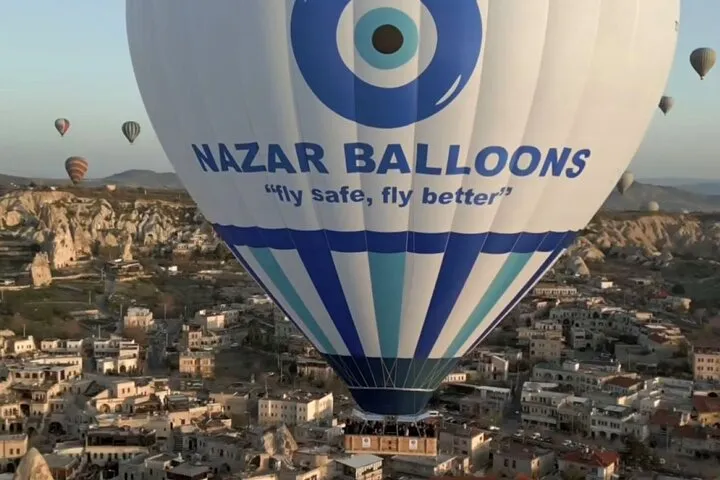 from $90.03
Sunrise Balloon Flight over Göreme — Nazar Balloons
The lowest listed price among the valley's big names, with the same dawn script: hotel pickup, breakfast, about an hour in the air, certificate.
Check Availability from $21.07
Full Day Cappadocia Red and Green Combined Day Tour
The whole classic loop in one day: the north valleys, the Open Air Museum side, then the underground city and Ihlara on the green half. Entry tickets are extra.
Check AvailabilityPrices, ratings and details are the platform's own. dollar figures are the listed prices — the platform bills in your account's currency.
Pair The Timing With The Rest Of The Plan
Balloon weather
The timing verdict assumes your dawn clears, so read the balloon weather page for what the go/no-go actually measures and what a cancellation refunds.
The no-fly question Check AvailabilityGetting to Göreme
Nevşehir airport sits about 40 minutes away and Kayseri about 75 km, and the transfer choice changes with arrival hour. Getting to Göreme covers both.
Airports and the road in Check AvailabilityWhat a day costs
Season moves what sells out more than what things cost, and what a day costs puts numbers on the parts that stay fixed.
The budget layer Check AvailabilityBest Time To Visit Cappadocia: Questions
What is the best month to visit Cappadocia?
May and September take the verdict, on the ERA5 averages and the balloon record together. May pairs a 21.7°C high and 8.3°C nights with green valleys, and September holds a 26.0°C high with only 13.9 mm of rain. Both sit inside the April–June and September–October window this page argues for. If you must travel in July or August, book dawn activities and keep museums for the afternoon. For the full month grid, see the comparison table above.
How many days do I need in Cappadocia?
Two is the minimum, one dawn for the balloon flight and one full day for the northern valley cluster around Göreme. Three is comfortable, adding Derinkuyu or Kaymaklı and the Ihlara direction without rushing. A single day forces you to choose between flying and walking, which is a poor trade in a region whose two headline experiences sit at opposite ends of the same day. The day-by-day plans live on the 2-day itinerary and the 3-day itinerary.
What time of year is best for a balloon flight over Cappadocia?
Flights run year-round and roughly 260 dawns a year clear, so every month can fly. July and August have the most reliable clearance because high pressure dominates and rain is 4.4 mm a month. Winter dawns fly beautifully when cleared but are refused more often, and January nights average −4.4°C at the launch field. The booking rules, refunds and the green-flag clearance system are on the balloon weather page.
What airport do you fly to for Cappadocia?
Two airports serve the region. Nevşehir (NAV) is about 40 minutes from Göreme and handles Istanbul flights. Kayseri (ASR) is about 75 km away, roughly 1 h to 1 h 20 by road, and offers more airlines and seasonal European routes. No train exists, so the choice is air plus transfer or a long road journey. The transfer options and drive times are compared on getting to Göreme.
Does Cappadocia work in winter?
It works, with the trade-off stated plainly. Highs run 5.5 to 7.8°C and nights average −2.2 to −4.4°C from December to February, museums open daily, and snow on the chimneys is the region's best photograph. Against that, shaded valley paths hold ice, the day shortens, and a run of no-go dawns can leave a balloon-less trip. Come in winter for the landscape and the quiet, not for a full programme. The winter guide has the detail.
What is closed when I visit Cappadocia?
Nothing closes on a weekly basis, the Ministry museums here open every day. The one fixed rule is that on the first day of each religious holiday, Ramazan Bayramı and Kurban Bayramı, the museums stay closed until midday, and those dates move with the lunar calendar each year. Autumn hour changes are announced separately rather than printed as a fixed winter timetable, so gate times get re-checked on arrival. What the Museum Pass covers matters more than opening days for most trips.
The Year From The Basket
Three clips that show how the same dawn looks in three different seasons.
Is The World's Most Magical Hot Air Balloon Experience Worth It? Guide To Cappadocia, Turkey
A full visit-level review of the balloon morning, useful for judging what the season actually delivers before you book.
Video: AdriVentureCappadocia Balloon Watching – Sunrise View in Göreme Turkey 4K
A 4K sunrise over the Göreme valley showing the launch pattern and light you are timing a trip around.
Video: Cappadocia Page TurkeyCappadocia in Winter! What to Expect, Things to Do, Balloons & Cozy Cave Hotels | Turkey Travel
The winter case on camera, from snowy cones to cave hotels, matching the honest verdict in the winter block above.
Video: Travel ReviewsVideos load from YouTube only when you press play.
Prices, hours and terms are set by the venue or operator and confirmed at checkout.
We may earn a commission if you book through one of our links, at no extra cost to you. Full affiliate disclosure